
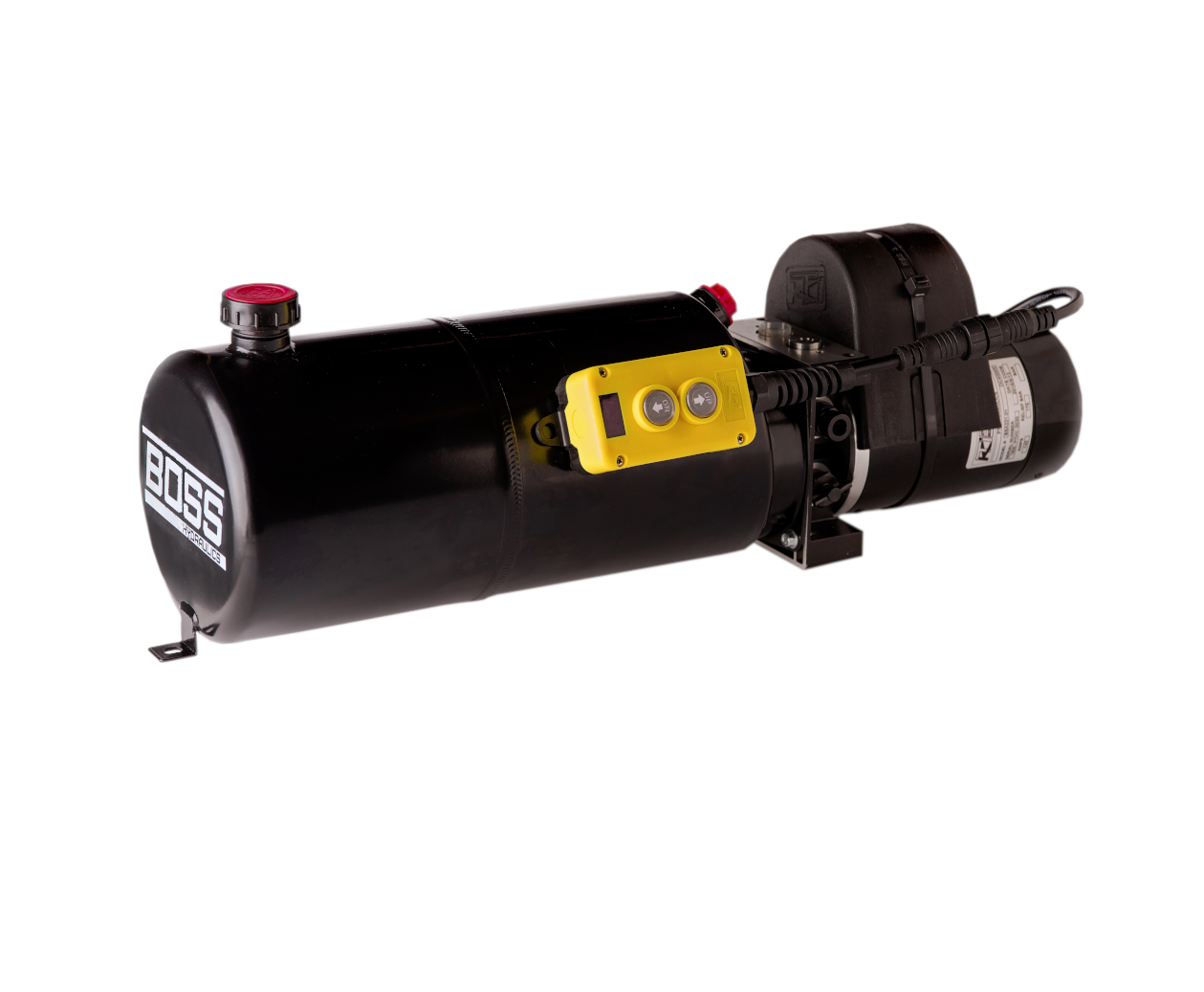


DC Hydraulic Power Packs for Mobile and Battery-Powered Equipment
A DC hydraulic power unit is a compact hydraulic power source designed to operate from a 12V or 24V DC battery system. These units provide hydraulic flow and pressure for mobile machinery, vehicle-mounted equipment, trailers and other applications where AC mains power or a mechanical PTO is not available.
Gerrard Hydraulics supplies DC hydraulic power units with flow rates of up to 20 litres per minute and reservoir capacities up to 20 litres. Units can be configured for single-acting or double-acting hydraulic applications, with a range of pumps, valves, controls, reservoirs and pendant options available.
Typical applications include tailgate lifters, low loader ramps, tip trailers, mobile lifting equipment, agricultural machinery and other hydraulic systems requiring compact, battery-powered hydraulic actuation.
Looking for a DC hydraulic power pack for a vehicle, trailer or mobile application? Contact Gerrard Hydraulics to discuss your requirements.
What Is a DC Hydraulic Power Unit?
A DC hydraulic power unit is a self-contained hydraulic system that uses electrical power from a 12V or 24V battery to drive a hydraulic pump.
The pump draws hydraulic fluid from the reservoir and supplies it to the hydraulic circuit, allowing connected cylinders or hydraulic actuators to perform lifting, lowering, tilting or positioning functions.
In simple terms:
12V/24V DC battery → DC motor → Hydraulic pump → Hydraulic flow and pressure → Hydraulic equipment
DC hydraulic power units are particularly useful where equipment needs hydraulic power without access to AC mains electricity, a diesel engine or a hydraulic PTO.
DC Hydraulic Power Unit Specifications
| Specification | Details |
| Power source | 12V or 24V DC battery |
| Maximum flow | Up to 20 L/min, depending on pressure |
| Reservoir capacity | Up to 20 litres |
| Hydraulic circuits | Single-acting and double-acting |
| Valve options | Solenoid, manual, pressure-compensated and specialised manifolds |
| Valve manifolds | CETOP and stackable double-acting options |
| Pendant controls | Two-button single/double acting and four-button double acting |
| Start solenoid | 200A continuously rated |
| Motor | Extended-duty DC motor |
| Manual override | Standard on single-acting packs |
| Lowering control | Adjustable lowering flow control on single-acting packs |
| Reservoir options | Steel and plastic configurations |
| Application | Mobile, vehicle, trailer and industrial hydraulic equipment |
Actual performance depends on the selected pump, operating pressure, motor voltage and hydraulic circuit.
Key Features of DC Hydraulic Power Packs
12V and 24V DC Operation
DC hydraulic power packs are designed to operate from standard 12V or 24V battery systems, including vehicle batteries and standalone battery banks.
This makes them suitable for equipment where hydraulic power needs to be available independently of AC mains electricity.
Up to 20 L/min Flow
The available hydraulic flow can reach up to 20 litres per minute, depending on operating pressure and the selected pump configuration.
The appropriate flow rate should be determined by the cylinder size, required operating speed and hydraulic pressure of the application.
Reservoirs Up to 20 Litres
A range of reservoir sizes is available, with options up to 20 litres.
Different reservoir configurations allow the power unit to be matched to the available installation space and hydraulic circuit requirements.
Extended-Duty DC Motors
Extended-duty DC motors are designed for applications requiring more than occasional short-duration operation.
The required motor and duty cycle should be selected according to the hydraulic load and operating conditions.
200A Continuous Start Solenoid
Standard models incorporate a 200 amp continuously rated start solenoid.
An optional solenoid cover can also be specified where additional protection from the operating environment is required.
Manual Override
Manual override is standard on single-acting power packs.
This provides an alternative method of operating the hydraulic function where required by the application.
Adjustable Lowering Flow Control
Single-acting packs are fitted with an adjustable lowering flow control valve as standard.
This allows the lowering speed of the connected hydraulic equipment to be controlled according to the application.
Pendant Remote Controls
Hand pendant options include:
- Two-button pendant for single or double-acting operation
- Four-button pendant for double-acting operation
- Pendant extension cables
Remote pendant controls allow operators to control hydraulic functions from a suitable position around the machinery or vehicle.
Valve Options for DC Hydraulic Power Units
DC hydraulic power units can be configured with different valve arrangements depending on the hydraulic circuit.
Available options include:
- Solenoid control valves
- Manual control valves
- Pressure-compensated flow controls
- CETOP valve manifolds
- Stackable double-acting valves
- Special valve manifolds
The valve configuration should be selected according to whether the system requires single-acting or double-acting cylinder operation and the specific control functions required.
How Does a DC Hydraulic Power Unit Work?
A DC hydraulic power unit operates through several basic stages:
- Battery power – A 12V or 24V battery supplies electrical power to the unit.
- DC motor operation – The electric motor drives the hydraulic pump.
- Hydraulic flow – The pump draws fluid from the reservoir and delivers it into the hydraulic circuit.
- Hydraulic actuation – The hydraulic fluid operates a cylinder, motor or other actuator.
- Control – Valves and pendant controls determine the direction and operation of the hydraulic function.
- Return flow – Hydraulic fluid returns to the reservoir where it can be recirculated.
The exact circuit depends on whether the application requires single-acting or double-acting operation.
Applications for DC Hydraulic Power Packs
Vehicle Loading and Transport
DC hydraulic power packs are commonly suited to vehicle and trailer applications where hydraulic lifting or tilting is powered directly from the vehicle battery.
Typical applications include:
- Tailgate lifters and tail lifts
- Low loader lift ramps
- Tip trailers and dump trailers
- Car carrier tilt-beds
- Vehicle recovery equipment
- Loading ramps
Mobile Lifting Equipment
Compact battery-powered hydraulic systems can be used for:
- Scissor lifts
- Small aerial work platforms
- Hydraulic dock levelers
- Hoists
- Elevator platforms
- Small boom lifts
- Wheelchair access ramps
Agriculture and Utility Equipment
Potential agricultural and utility applications include:
- Towed farm implement lift cylinders
- Plough lift systems
- Cutter height adjustment
- Small log splitters
- Wood hoists
- Snowplough lifting systems
- Spreader tilt mechanisms
Marine and Recreational Equipment
DC hydraulic power units can also provide compact hydraulic actuation for:
- Boat davits
- Outboard tilt systems
- Small anchor winches
- Hydraulic landing gear
- RV and camper trailer jacks
- Horse floats
- Gooseneck trailers
Emergency and Standby Hydraulic Applications
A DC hydraulic power unit can also be used as an auxiliary or standby hydraulic power source.
For larger machinery, a compact battery-powered unit may provide an alternative means of operating selected hydraulic functions if the primary engine or hydraulic system becomes unavailable.
Potential applications can include emergency lowering systems, auxiliary actuation and other standby hydraulic functions.
The suitability of a DC power unit for emergency applications depends on the machinery’s hydraulic and safety requirements.
How to Choose the Right DC Hydraulic Power Unit
Selecting the correct DC hydraulic power unit starts with understanding the hydraulic requirements of the equipment.
1. Determine Battery Voltage
Confirm whether the equipment uses a 12V or 24V DC electrical system.
2. Determine Hydraulic Flow
Establish the flow required to operate the cylinder or hydraulic actuator at the desired speed.
DC units can provide up to 20 L/min depending on pressure and configuration.
3. Determine Operating Pressure
The required hydraulic pressure should be established before selecting the pump and motor.
The power unit and all hydraulic components must be appropriately rated for the operating conditions.
4. Select Single or Double Acting
A single-acting unit is appropriate where hydraulic power is required in one direction and the cylinder returns through gravity or another external force.
Double-acting systems supply hydraulic power in both directions.
5. Select the Valve Configuration
Consider whether the application requires solenoid controls, manual controls, flow control, CETOP manifolds or specialised valve arrangements.
6. Consider Reservoir Capacity
Reservoir capacity should be appropriate for the hydraulic circuit and available installation space. Options are available up to 20 litres.
7. Consider Remote Control
Select the appropriate pendant configuration based on the number and type of hydraulic functions being controlled.
Frequently Asked Questions
Where can I buy high-quality DC hydraulic power units online?
Gerrard Hydraulics supplies DC hydraulic power units and hydraulic power packs for vehicle, trailer, agricultural, industrial and mobile applications. Units can be configured according to voltage, flow, reservoir size, valve arrangement and control requirements.
What features should I look for in a DC hydraulic power unit?
Consider battery voltage, hydraulic flow, operating pressure, reservoir capacity, duty cycle, pump type, valve configuration, control method and installation requirements. For mobile equipment, extended-duty motors and suitable electrical protection are also important considerations.
How do I choose the right DC hydraulic power unit for my application?
Start with the equipment’s battery voltage, required hydraulic flow and pressure. Then determine whether you need single-acting or double-acting operation, the required reservoir size, valve configuration and pendant controls.
Can DC hydraulic power units be customised?
Yes. DC hydraulic power packs can be configured with different reservoirs, pumps, valve manifolds, controls and pendant options to suit the application.
What is a DC power unit?
A DC power unit is a system powered by direct current, typically from a 12V or 24V battery. In hydraulic applications, the DC motor drives a hydraulic pump to provide hydraulic flow and pressure.
What is a DC power supply unit?
A DC power supply unit provides direct-current electrical power to equipment. A DC hydraulic power unit uses that electrical energy to drive a hydraulic pump.
What is a DC power distribution unit?
A DC power distribution unit distributes electrical power from a DC source to multiple electrical circuits or devices. It is different from a DC hydraulic power unit, which converts electrical energy into hydraulic power.
Why Choose Gerrard Hydraulics?
Gerrard Hydraulics supplies hydraulic power solutions for transport, agriculture, construction, material handling, marine and mobile equipment.
Our DC hydraulic power solutions include:
- 12V DC hydraulic power units
- 24V DC hydraulic power units
- DC hydraulic power packs
- Single-acting power packs
- Double-acting power packs
- Solenoid and manual valve configurations
- CETOP valve manifolds
- Extended-duty DC motors
- 200A continuously rated start solenoids
- Pendant remote controls
- Steel and plastic reservoirs
- Custom valve manifolds
With flow capacity of up to 20 L/min and reservoir options up to 20 litres, units can be configured for a wide range of intermittent and medium-duty hydraulic applications.
Get a DC Hydraulic Power Pack
Need a DC power pack hydraulic solution for a truck, trailer, agricultural machine, mobile platform or other hydraulic application?
Gerrard Hydraulics can help you select a suitable DC hydraulic power unit based on your required voltage, flow, pressure, reservoir capacity, valve configuration and control requirements.
Gerrard Hydraulics
📍 39 Sorbonne Crescent, Canning Vale WA 6155
📞 (08) 9455 2344
✉ admin@gerrardhydraulics.com.au
