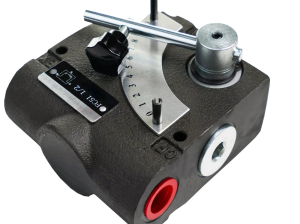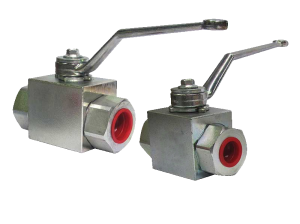
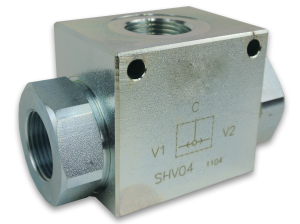
Hydraulic Needle Valves for Precise In-Line Flow ControlGerrard Hydraulics supplies in-line hydraulic needle valves designed to regulate fluid flow and control actuator speed in industrial and mobile hydraulic systems. These adjustable valves restrict hydraulic flow in both directions, allowing operators to fine-tune the movement of hydraulic cylinders and other equipment. The LG-series hydraulic needle valves feature an in-line steel body, female BSPP parallel ports and a multi-turn adjustment knob with a graduated scale for repeatable settings. With standard sizes available from 1/4-inch to 1-inch BSPP, the range suits different hydraulic line sizes and flow requirements. The LG-12-31.5 hydraulic needle valve, for example, features 1/2-inch BSPP ports, a maximum working pressure of 315 bar and a maximum flow rate of 85 L/min. It is suitable for applications requiring adjustable hydraulic flow restriction, provided the operating conditions remain within the valve’s specifications. Looking for hydraulic needle valves in Australia? Contact Gerrard Hydraulics in Canning Vale, Perth, for assistance selecting an in-line needle valve to suit your hydraulic circuit. What Is a Hydraulic Needle Valve?A hydraulic needle valve is a manually adjustable flow control valve that regulates the amount of hydraulic fluid passing through a circuit. Turning the adjustment knob moves a tapered needle towards or away from an internal orifice, changing the available flow area. This mechanism makes a needle valve useful for adjusting hydraulic cylinder speed, controlling the movement of machinery and fine-tuning fluid flow. Unlike a pressure-compensated flow control valve, a standard needle valve does not automatically maintain a constant flow rate when pressure conditions change. The LG-series in-line needle valve is a non-pressure-compensated design that restricts flow in both directions. It is suited to circuits where adjustable restriction is required and changes in load, pressure and oil viscosity can be accommodated. Available Hydraulic Needle ValvesGerrard Hydraulics offers hydraulic flow control solutions for different pressure, flow and operating requirements. Select the appropriate valve based on your port size, required flow rate and circuit function. LG-Series In-Line Needle ValvesThe LG-series provides manually adjustable, bidirectional flow restriction for hydraulic systems. Its graduated adjustment knob allows operators to return to previously established settings, while the in-line body simplifies installation into a compatible hydraulic line. Key features include:
Other Hydraulic Flow Control OptionsA standard needle valve is not the right solution for every application. Gerrard Hydraulics also supplies other hydraulic flow control options to suit different circuit requirements.
If you need a hydraulic needle flow control valve for a particular machine, discuss the circuit arrangement and operating conditions with the Gerrard Hydraulics team before selecting a model. Hydraulic Needle Valve SpecificationsThe following specifications apply to the supplied LG-series and STB in-line needle valve range. Actual capacity depends on the selected model. Select Your Port Size
Important: The 1-inch STB-G1 uses a different valve body from the LG-series models. Its maximum flow and pressure ratings therefore differ. Confirm the exact model and its specifications before ordering. Maximum flow represents the stated capacity, not a guaranteed flow rate at every adjustment position or operating pressure. Actual flow through a needle valve depends on the restriction setting, pressure differential, fluid viscosity and hydraulic circuit. General Technical Specifications
LG-12-31.5: 1/2-Inch Hydraulic Needle ValveThe LG-12-31.5 is a high-pressure, in-line hydraulic needle valve designed for precise adjustment of hydraulic flow and machinery speed.
The model is suitable for hydraulic circuits requiring manually adjustable flow restriction within its rated operating limits. It is not a pressure-compensated valve or a load-holding device. How Does a Hydraulic Needle Valve Work?A hydraulic needle valve works by progressively changing the opening through which hydraulic fluid passes.
The flow rate is not determined by the knob position alone. Pressure differential, hydraulic fluid viscosity and changes in load can affect the actual flow through the valve. For this reason, a standard needle valve is best suited to applications where adjustable restriction is acceptable and the required speed does not need to remain constant under all operating conditions. Common Applications for Hydraulic Needle ValvesHydraulic needle valves are used in machinery where operators need to adjust fluid flow or control the speed of a hydraulic function. Industrial MachineryNeedle valves can regulate the movement of hydraulic cylinders used in presses, clamping equipment, production machinery and other industrial systems. Agricultural EquipmentThey can be used to adjust the speed of compatible hydraulic functions on agricultural machinery and implements, subject to the circuit design and load requirements. Mining and Construction EquipmentIn suitable circuits, a hydraulic flow control needle valve can help regulate the movement of hydraulic actuators used in construction, mining and material-handling equipment. Hydraulic Cylinders and ActuatorsA needle valve can restrict the flow supplied to or returned from a cylinder, allowing the operator to adjust its movement speed. The correct placement depends on the direction of movement, the load characteristics and the risk of an overrunning load. Specialised Hydraulic CircuitsNeedle valves can also provide adjustable restriction for damping and other flow-regulation requirements where a simple, manually adjusted restriction is appropriate. The valve must always be selected according to the hydraulic circuit’s pressure, flow, fluid and safety requirements. How to Choose the Right Hydraulic Needle ValveChoosing the best hydraulic needle valve for industrial use involves matching the valve to the actual circuit rather than selecting it by port size or maximum pressure alone. 1. Match the Port SizeIdentify the hose or pipe connection where the valve will be installed. The LG-series range includes 1/4-inch, 3/8-inch, 1/2-inch and 3/4-inch BSPP options, while the 1-inch option uses the STB-G1 body. Check the thread type carefully. BSPP parallel threads are different from BSPT tapered threads and other connection standards. 2. Check the Required Flow RateDetermine the actual flow passing through the line. Compare it with the selected valve’s maximum flow rating. A valve operating close to its maximum capacity may offer limited useful adjustment for an application requiring a low flow rate. The appropriate size depends on the required flow range and the amount of restriction needed. 3. Confirm the Working PressureCheck both the normal operating pressure and the maximum pressure the valve may experience. The LG-series models listed above are rated to 315 bar, while the 1-inch STB-G1 is rated to 320 bar. Do not assume the entire range has the same pressure rating. 4. Consider the Required Direction of FlowA standard needle valve restricts flow in both directions. If a hydraulic cylinder must extend slowly but retract with minimal restriction, select a suitable reverse free-flow needle valve instead. 5. Assess Load BehaviourAn overrunning load, such as a boom or tipper body moving under gravity, can pull a cylinder faster than the pump supplies fluid. A needle valve on the inlet may not control that movement effectively. Depending on the circuit, metering the return flow or using a correctly selected counterbalance valve may be necessary. A standard needle valve must not be used as a load-holding safety device. 6. Check Fluid Compatibility and TemperatureConfirm that the hydraulic fluid is compatible with the valve and that the operating temperature and viscosity remain within the specified range. For the LG-series specifications supplied here, the fluid temperature range is -20°C to +70°C and the viscosity range is 2.8 to 380 mm²/s. 7. Verify Installation and Operating RequirementsCheck the port connections, sealing method, installation space and accessibility of the adjustment knob. For high-pressure systems, installation and commissioning should be carried out by suitably qualified personnel in accordance with the equipment manufacturer’s instructions. If you are unsure which hydraulic needle valve suits your machine, provide the team with the required flow rate, working pressure, port size, hydraulic fluid and a description of the function being controlled. Technician’s Advice: Installing and Adjusting Needle ValvesCorrect installation and adjustment are essential for reliable hydraulic flow control. Start with the valve fully open. Before starting the machine for the first time, place the needle valve in the fully open position where appropriate to the circuit and the manufacturer’s commissioning instructions. Confirm that the system’s relief and pressure protection arrangements are correctly configured. A restriction in the wrong position can create excessive pressure or heat. Adjust the valve under representative operating conditions. Hydraulic oil viscosity changes with temperature. A setting established with cold oil may produce a different flow rate once the system reaches its normal operating temperature. Avoid forcing the needle shut. Excessive force against the valve seat can damage the tapered needle or seat. A needle valve should not be used to compensate for a leaking component or to provide positive isolation unless the manufacturer explicitly rates it for that purpose. Remember that restricted flow generates heat. Energy dissipated across a restriction is converted into heat. Excessive throttling can increase oil temperature and affect the wider hydraulic system. Use the correct valve for overrunning loads. A standard needle valve is not a load-holding device. Loads that can move under gravity or external forces may require a counterbalance valve or another suitable load-control arrangement. Seal BSPP connections correctly. BSPP parallel threads typically seal through a suitable bonded washer, O-ring or other specified sealing arrangement on the mating fitting. Do not assume the threads themselves provide the seal or use thread tape unless the fitting manufacturer specifies a compatible method. Where Can You Buy Hydraulic Needle Valves in Australia?Gerrard Hydraulics supplies hydraulic components for industrial and mobile hydraulic systems from its Perth facility in Canning Vale, Western Australia. If you are looking for hydraulic needle valves suppliers in Australia, the team can help you identify a suitable valve based on your connection size, flow requirements, working pressure and application. Gerrard Hydraulics also stocks other hydraulic flow control options, including pressure-compensated valves and other in-line valve types, for applications where a standard needle valve may not be suitable. Contact the team for product availability, model confirmation and assistance with selecting the right valve for your system. Frequently Asked QuestionsWhat is the best type of hydraulic needle valve for industrial use?The best hydraulic needle valve depends on the required flow rate, working pressure, port size, fluid compatibility and circuit function. A standard in-line needle valve is suitable where manually adjustable flow restriction is required in both directions. A reverse free-flow model is more appropriate when flow must be restricted in one direction but relatively unrestricted in the other. Where flow needs to remain more consistent as pressure changes, consider a pressure-compensated flow control valve. Are there local suppliers of hydraulic needle valves in Australia?Yes. Gerrard Hydraulics supplies hydraulic components from its facility at 39 Sorbonne Crescent, Canning Vale, WA 6155. Contact the team on (08) 9455 2344 to discuss your application, confirm product availability and identify a suitable hydraulic needle valve. How do I choose the right hydraulic needle valve for my application?Start by identifying the line size, required flow rate and maximum working pressure. Then check the fluid type, temperature, viscosity, direction of flow and load behaviour. Confirm whether you need bidirectional restriction, reverse free flow or pressure compensation before choosing the valve. What are the advantages of hydraulic needle valves in machinery?Hydraulic needle valves provide straightforward manual flow adjustment, allowing operators to regulate actuator speed and fine-tune hydraulic functions. A graduated adjustment knob can help with repeatable settings, while an in-line design can simplify installation. However, standard needle valves are not pressure compensated and may not maintain a constant flow rate when load or pressure conditions change. How do hydraulic needle valves work?A needle valve uses a tapered needle to change the size of an internal flow opening. Turning the adjustment knob changes the restriction, which affects the amount of hydraulic fluid passing through the valve. In a standard bidirectional needle valve, this restriction applies to flow in both directions. What are the standard specifications for hydraulic needle valves?Specifications vary by model. The supplied LG-series range covers port sizes from 1/4-inch to 3/4-inch BSPP, with maximum working pressure of 315 bar and maximum flow rates from 40 to 175 L/min. The 1-inch STB-G1 model has a stated maximum working pressure of 320 bar and maximum flow of 150 L/min. The LG-series fluid temperature range is -20°C to +70°C, with a viscosity range of 2.8 to 380 mm²/s. Always confirm the selected model’s specifications before installation. How do I know if a hydraulic needle valve meets industry standards?Check the manufacturer’s technical datasheet, pressure and flow ratings, port-thread specifications, fluid compatibility and any applicable product conformity documentation. Confirm that the valve is suitable for the intended hydraulic circuit and complies with the equipment’s design and safety requirements. Do not assume that a valve meets a particular Australian or international standard unless the manufacturer or supplier provides supporting documentation. Can a hydraulic needle valve completely stop fluid flow?A needle valve can substantially restrict flow when closed, but it should not automatically be treated as a leak-tight shut-off valve. Internal leakage may occur, depending on the design and operating conditions. Use a valve specifically rated for isolation or load holding when the application requires those functions. What is the difference between a needle valve and a pressure-compensated flow control valve?A standard needle valve controls flow by manually changing the size of an orifice. Its flow rate can change as the pressure differential or fluid viscosity changes. A pressure-compensated flow control valve uses a compensating mechanism to help maintain a more consistent flow rate across a specified operating range. The correct choice depends on the level of speed consistency required by the application. Why Choose Gerrard Hydraulics?Gerrard Hydraulics supplies hydraulic components for industrial, agricultural, mining, construction and other mobile equipment applications. When selecting an in-line needle valve, our team can help you assess:
Our range includes in-line valves, pressure-compensated flow control valves and other hydraulic components to support different circuit requirements. Enquire About Hydraulic Needle ValvesNeed a hydraulic needle valve for industrial machinery or a mobile hydraulic system? Contact Gerrard Hydraulics to discuss your requirements and identify an appropriate valve for your application. Gerrard Hydraulics 📍 39 Sorbonne Crescent, Canning Vale WA 6155 Speak with our team about hydraulic needle valves, in-line flow control and alternative valve options for your hydraulic system. |

Needle Valves
Description
Enquire