
Pressure Compensated Flow Control Valves
Gerrard Hydraulics supplies hydraulic flow control solutions for industrial and mobile machinery. A pressure compensated flow control valve helps maintain a more consistent hydraulic flow rate when operating pressure changes, supporting predictable actuator speeds and controlled hydraulic motor operation.
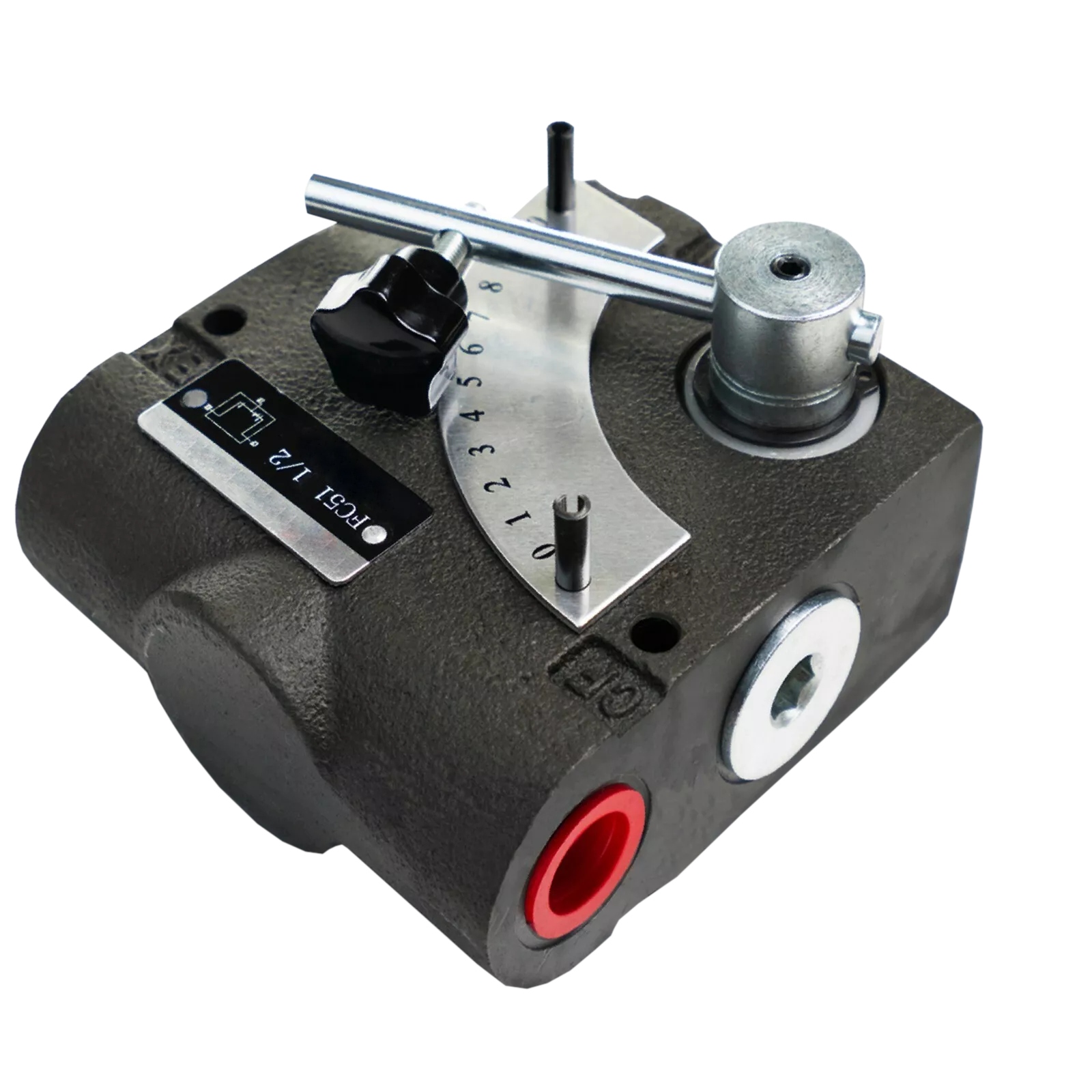
The Brand Hydraulics FC51 series is a three-port pressure compensated priority flow control valve. It allows operators to adjust the controlled flow (CF) while directing excess pump flow through a separate excess-flow (EX) port.
The FC51-1/2 features an adjustable controlled-flow range of 0–16 GPM and a rated maximum operating pressure of 3,000 PSI (207 bar). Its manual lever and internal compensator spool make it suitable for hydraulic systems requiring adjustable priority flow.
Looking for pressure compensated flow control valves in Australia? Contact Gerrard Hydraulics in Canning Vale, Perth, to discuss your application and hydraulic circuit requirements.
What Is a Pressure Compensated Flow Control Valve?
A pressure compensated flow control valve regulates hydraulic fluid flow while compensating for changes in pressure across the valve. This helps maintain a more consistent flow rate when the load on the connected equipment changes, within the valve’s operating limits.
The Brand Hydraulics FC51 uses an internal compensator spool to regulate flow through two pressure-compensated outlets.
- Controlled Flow (CF): Supplies the adjustable flow required by the priority hydraulic function.
- Excess Flow (EX): Directs remaining pump flow to another suitable circuit or return path.
The operator adjusts the CF flow using a side lever. Unlike a standard needle valve, which changes flow by restricting an opening, a pressure compensating flow control valve adjusts internally to reduce the effect of pressure variations on flow.
Brand Hydraulics FC51 Pressure Compensated Flow Control Valve
The FC51 is designed for hydraulic circuits requiring adjustable priority flow and an excess-flow outlet.
Key features include:
- Three-port priority flow control design
- Adjustable controlled flow from 0 to 16 GPM for the stated 1/2-inch model
- Maximum rated operating pressure of 3,000 PSI (207 bar)
- Manual side-lever operation
- Cast iron body and steel spool components
- Precision-ground, chrome-plated compensator spool
- Buna-N seals
- Dashpot design to help suppress compensator spool hunting
- Recommended 30-micron hydraulic filtration
The FC51 can also operate as a two-port restrictive flow control valve when the EX port is plugged. This configuration requires a pressure-compensated or load-sensing pump. The CF port must never be blocked.
Pressure Compensated Flow Control Valve Specifications
The following specifications are based on the supplied FC51 product information. Confirm the exact configuration before ordering.
| Specification | Details |
| Manufacturer | Brand Hydraulics |
| Series | FC Series |
| Model | FC51-1/2 |
| Valve type | Three-port pressure compensated priority flow control valve |
| Controlled-flow range | 0–16 GPM |
| Maximum rated operating pressure | 3,000 PSI (207 bar) |
| Nominal port size | 1/2 inch |
| Connection type | NPT for the stated configuration |
| Actuation | Manual side lever |
| Body material | Cast iron |
| Spool material | Steel, precision-ground and chrome-plated |
| Seal material | Buna-N |
| Recommended filtration | 30-micron |
| Reverse-flow operation | Not recommended |
The supplied information also refers to total inlet flow capacities of up to 30 GPM for applicable configurations. This is different from the stated 0–16 GPM controlled-flow range of the FC51-1/2. Confirm the maximum inlet flow for the specific model.
How Does a Pressure Compensated Flow Control Valve Work?
The pressure compensated flow control valve function relies on an internal spool that responds to pressure changes and adjusts the available flow opening.
- Fluid enters the valve. The hydraulic pump supplies fluid to the inlet.
- The operator sets the flow. Moving the lever adjusts the controlled-flow setting at the CF port.
- The compensator responds. The internal spool adjusts the flow opening to reduce the effect of pressure changes.
- Controlled flow reaches the priority function. The CF port supplies the connected hydraulic motor or actuator.
- Excess flow exits through EX. Remaining pump flow passes through the excess-flow outlet according to the circuit design.
Actual performance depends on pump capacity, pressure differential, load conditions and correct system configuration. Pressure compensation does not guarantee a constant flow under every operating condition.
Pressure Compensated Flow Control Valve Applications
Pressure compensated flow control valve applications include hydraulic systems where maintaining a more consistent flow rate is important.
Agricultural Machinery
Suitable applications may include harvester reel drives, grain-handling equipment, tractor auxiliary circuits, mowers and hydraulic implements. The valve can help regulate flow to a priority function when the required operating conditions are within its ratings.
Construction and Mobile Equipment
Applications may include hydraulic attachments for skid steer loaders, compact track loaders and other mobile machinery. Check the required attachment flow and total pump capacity before selecting a valve.
Industrial Machinery
Pressure compensated flow control valves can be used in suitable conveyor systems, hydraulic presses, clamping equipment, machine tools and production machinery where controlled actuator movement is required.
Commercial and Specialised Equipment
Selected truck-mounted hydraulic equipment, material-handling systems and specialised machinery may use pressure compensated flow control to regulate hydraulic motors or auxiliary functions.
The correct valve depends on the system’s flow, pressure, pump type, fluid and safety requirements.
Benefits of Pressure Compensated Flow Control Valves
More consistent flow: Pressure compensation helps reduce changes in controlled flow caused by pressure variations within the valve’s operating range.
Adjustable priority flow: The operator can set the required CF flow while remaining pump flow is directed through the EX port.
Flexible circuit configuration: The three-port design supports priority-flow and bypass arrangements. A two-port configuration is also possible with the appropriate pump and installation.
Durable construction: The FC51 features a cast iron body, steel spool components and Buna-N seals, subject to suitable operating conditions and maintenance.
How to Choose the Right Pressure Compensated Flow Control Valve
Consider the following factors before selecting a valve.
- Required controlled flow: Confirm the flow needed by the hydraulic motor or actuator. The stated FC51-1/2 range is 0–16 GPM.
- Total pump flow: Ensure the valve can accommodate the inlet flow while providing a suitable excess-flow path.
- Working pressure: The FC51 guide specifies a rated pressure of 3,000 PSI (207 bar). Check the maximum pressure expected throughout the circuit.
- Port size and thread type: Confirm the connection specification. NPT, BSP and SAE connections are not interchangeable.
- Pump configuration: Check whether the application requires three-port priority flow or two-port restrictive flow control.
- Fluid and filtration: Confirm fluid compatibility and follow the manufacturer’s recommendation for 30-micron filtration.
- Mounting requirements: Provide a flat mounting surface and sufficient clearance for the lever spool. Avoid bending or twisting the valve body.
If you are unsure which pressure compensating flow control valve suits your machinery, provide Gerrard Hydraulics with the pump flow, working pressure, required controlled flow and connection details.
Installation and Operating Advice
Correct installation helps prevent damage and supports reliable valve operation.
- Keep the CF port open. Blocking this port can cause the compensation spool to shift and block the EX port, rendering the valve inoperable.
- Check the EX configuration. Plugging the EX port requires a compatible pressure-compensated or load-sensing pump.
- Avoid reverse flow. The manufacturer does not recommend reverse-flow operation.
- Mount the valve correctly. Use a flat mounting surface and avoid distorting the valve body.
- Follow filtration requirements. The supplied installation guide recommends 30-micron filtration.
- Use suitable thread sealant. The manufacturer states that using PTFE (Teflon) tape to seal pipe threads voids the warranty. Follow its specified sealing instructions.
- Observe pressure safety precautions. Overpressure can cause sudden component failure and serious injury. Follow the manufacturer’s instructions and use suitable pressure protection.
Frequently Asked Questions
What are the key specifications of pressure compensated flow control valves?
Specifications vary by model. The Brand Hydraulics FC51-1/2 has a stated controlled-flow range of 0–16 GPM, a rated maximum operating pressure of 3,000 PSI (207 bar), a three-port design and a 1/2-inch NPT connection for the specified configuration. The manufacturer recommends 30-micron filtration.
What features should I look for in a pressure compensated flow control valve?
Check controlled-flow capacity, total inlet flow, maximum working pressure, port size, thread type, pump compatibility and fluid requirements. Also consider whether you need priority flow with an excess-flow outlet or a restrictive two-port arrangement.
What are the common industrial applications?
Applications include hydraulic motor control, conveyors, presses, clamping systems, machine tools and selected automated machinery. These valves are useful where more consistent flow is needed as operating pressure changes.
What are the benefits of pressure compensated flow control?
Pressure compensation helps reduce the effect of changing pressure on flow rate. This can support more consistent actuator speeds and controlled distribution of hydraulic pump flow.
Which industries use pressure compensated flow control valves?
Agriculture, construction, manufacturing, material handling and selected commercial vehicle and specialised equipment industries use these valves where the hydraulic circuit requires controlled flow under changing loads.
How does a pressure compensated valve differ from a needle valve?
A needle valve manually restricts an opening, so its flow rate can change with pressure differential and fluid viscosity. A pressure compensated valve adjusts internally to help maintain a more consistent flow rate within its operating range.
Can the FC51 operate as a two-port valve?
Yes. The manufacturer states that the EX port can be plugged for restrictive flow control when used with a pressure-compensated or load-sensing pump. The CF port must never be blocked.
How do I check whether a valve meets industry standards?
Review the manufacturer’s technical documentation, pressure and flow ratings, connection details and applicable conformity records. Confirm that the valve is suitable for the intended equipment and installation. Do not assume compliance with a specific standard without supporting documentation.
Why Choose Gerrard Hydraulics?
Gerrard Hydraulics supplies hydraulic components for industrial and mobile equipment applications. Our team can help you assess flow requirements, working pressure, pump configuration, port compatibility and the appropriate flow control arrangement.
Enquire About Pressure Compensated Flow Control Valves
Need a pressure compensated flow control valve for your hydraulic system? Contact Gerrard Hydraulics to discuss your application and confirm the specifications required for your machinery.
Gerrard Hydraulics
📍 39 Sorbonne Crescent, Canning Vale WA 6155
📞 (08) 9455 2344
✉ admin@gerrardhydraulics.com.au